ENVIRONMENTAL STEWARDSHIP
OUR COMMITMENT TO OPERATING
SUSTAINABLY
As a leading metals processing company, we place tremendous value in the safe and efficient use of resources. We are committed to operating responsibly while leveraging technology and best practices to minimize our impact on the environment and our communities. We continually assess evolving requirements, best practices, and transparent reporting.

Our
Priorities
As a result of a materiality assessment, we determined Reliance’s most significant environmental, social, and governance priorities based on their relevance to our business, operations, and stakeholders. These priorities include:
- The health and safety of our employees
- Human capital management
- Emissions from company-operated delivery trucks
- Overall energy usage
We expect to revisit this assessment periodically to reflect changes in our business, operating environment, and stakeholder expectations.

Accountability
Across
Stakeholders
We recognize that our responsibility to our investors, employees, their families, and the communities in which we live and work requires discipline and accountability. Guided by our core values, we’ve established a framework that embeds environmental stewardship throughout Reliance. While focusing on excellence, sustainable profitability, and delivering strong value, we:
- Provide a safe and productive workplace
- Maintain high standards for business practices
- Act as stewards of the environments in which we operate
- Share our success by giving back to our communities
Circular
by Design
As a metals service center company, Reliance operates as a distributor and first-stage processor of metal, not a metals producer or mill.
Our environmental footprint is fundamentally different from that of primary producers. Circularity and low emissions are inherent in our operations, resulting in lower direct greenhouse gas emissions. The core materials we process – steel and aluminum – are naturally sustainable. They are among the most commonly recycled materials in the United States and can be 100% recycled repeatedly without loss of quality.
TONS OF SCRAP
MATERIAL RECYCLED
IN 2025
MILLION INVESTMENT
OVER 5 YEARS IN
ENERGY EFFICIENCY
MILLION BUDGET
IN 2026 FOR ENERGY
SAVING INITIATIVES

Sustainability
In Practice
Operational actions aligned with our sustainability priorities
-
-
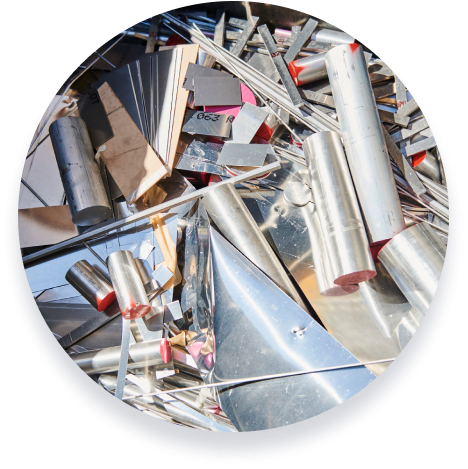
In 2025, Reliance reintroduced approximately 259,000 tons of recycled scrap material back into the manufacturing life cycle. Through controlled material handling and segregation practices, by‑products from our operations are redirected into productive reuse rather than disposal. We continually review our supply chain and process parameters to minimize waste.
-
-
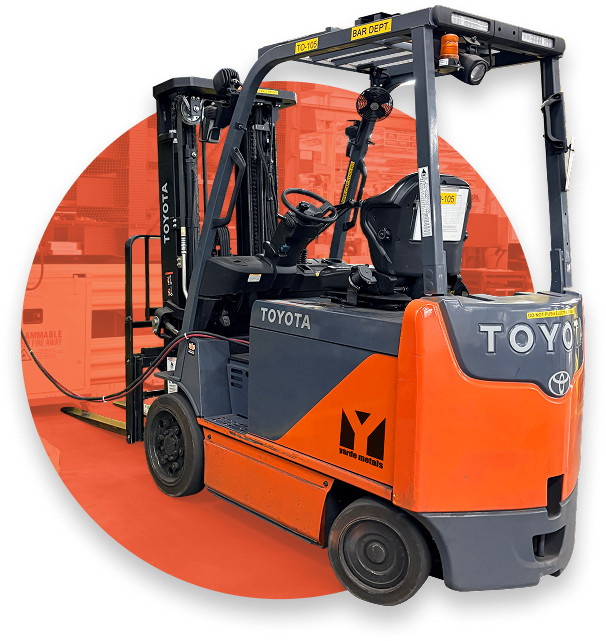
Over the past five years, Reliance has invested approximately $24 million in LED lighting, energy-efficient equipment, and solar power installations across our operations. In 2026, we budgeted an additional $4.6 million for related capital expenditures. These investments focus on improving operational efficiency and reliability while reducing energy consumption where feasible.
-
-
Fleet efficiency is an important operational consideration, evaluated alongside safety, service reliability, and overall operational performance. Our logistics and fleet operations are designed to support safe, reliable deliveries while managing fuel use and emissions. We have processes to ensure our fleet drivers manage weight loads, adhere to speed limits, and minimize unnecessary maneuvers – all elements that impact fuel efficiency and reduce emissions. Through observation, management, and transparency of performance, drivers are regularly trained and coached, making the roads safer and our environmental impact lower.
-
-
As a metals service center and distributor, not a metals producer or mill, our Scope 1 and 2 greenhouse gas emissions are primarily associated with fuel used by company-operated delivery trucks and electricity consumed at our facilities.
-
-
Reliance’s operations generally do not involve water intensive processes. As a result, water is not considered a material input for the majority of our operations, and we continue to monitor resource use as part of our overall operational assessments.
Environmental
Reporting
Our reporting is aligned with our business model and applicable regulatory requirements. This approach is practical, compliance focused, and intended to provide transparency into the environmental aspects most relevant to our operations. Currently, our Greenhouse Gas (GHG) Reporting Data provides a summary of our emissions and intensity metrics aligned with the GHG protocol.
SUSTAINABILITY REPORTING PARTICIPATION
Reliance participates in third-party sustainability disclosure and assessment initiatives in response to stakeholder expectations and to gain insights that help inform our continuous improvement efforts. This includes participation in the EcoVadis Sustainability Rating assessment and the Carbon Disclosure Project (CDP) environmental disclosure program. Participation does not imply endorsement or performance claims beyond what is disclosed.